
Published:
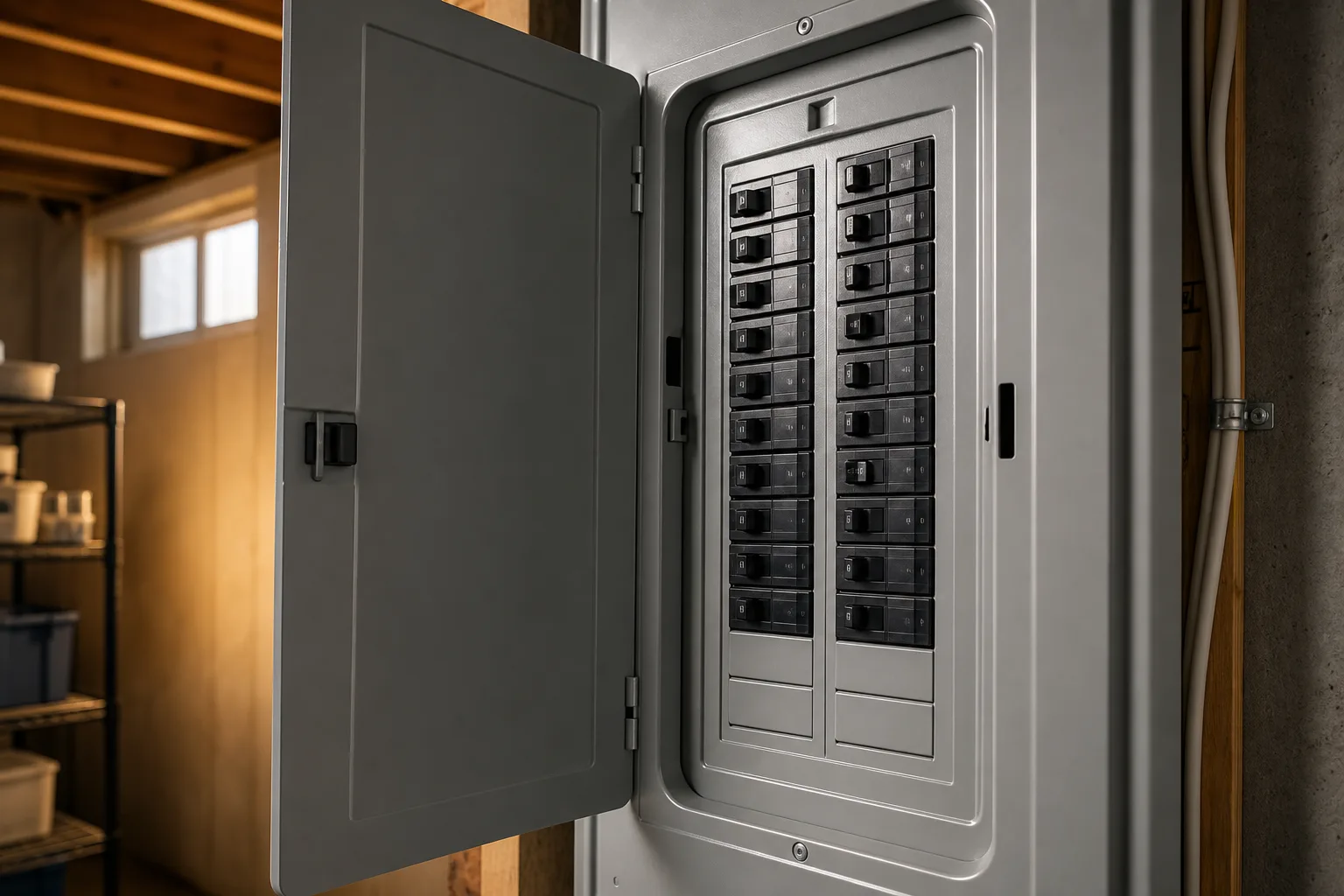
A circuit breaker is designed to open the circuit when it detects a condition the wiring should not continue carrying. One trip may follow an unusual combination of equipment. A breaker that trips repeatedly is telling you the underlying condition is still present.
Common categories of causes
An overloaded circuit is carrying more demand than it is designed to support. This often appears when several higher-demand devices share the same branch circuit.
A short circuit or ground fault involves current flowing along an unintended path. Damaged wiring, a failing device, moisture, or a connection problem can be involved. Modern protective breakers may also respond to arc-fault or ground-fault conditions.
The issue can also involve connected equipment, a loose or damaged connection, or the breaker and panel equipment themselves. The symptom alone does not identify which one is responsible.
What to note before calling
Without opening electrical equipment, note:
- Which breaker trips and which rooms or devices lose power
- What was running immediately before the trip
- Whether one appliance reliably triggers the problem
- Whether you noticed heat, buzzing, crackling, a burning odor, or discoloration
- Whether the problem began after new equipment was added
These observations help a licensed electrician reproduce and isolate the problem.
What not to do
Do not keep resetting a breaker that immediately or repeatedly trips. Do not install a larger breaker, hold a breaker in position, remove a panel cover, or handle exposed conductors. The breaker rating is coordinated with the circuit wiring; changing it without a proper assessment can create a serious hazard.
If you see smoke or arcing, smell burning, or find a panel or device that is unusually hot, move away from the hazard and seek appropriate immediate help.
Stephens Electric provides breaker diagnosis, electrical repairs, and troubleshooting in Anderson, Oconee, and Pickens counties.